Most cavities are painless until they’re serious. That’s the part nobody tells you until you’re sitting in the chair hearing words like “root canal” when you thought you were coming in for a cleaning. The early cavity signs are real, recognizable, and easy to act on – if you know what to look for before the damage runs deep.
This guide walks you through exactly what tooth decay looks and feels like at its earliest stages, how to tell the difference between a cavity and a stain, what happens when you wait, and what your dentist catches on an exam that you simply cannot see at home.
If you’re in Milton, Mississauga, or Brampton, our team at The Dental Team sees this every single week: patients who noticed something but waited. The ones who come in early walk out with a small filling, if anything at all. The ones who wait come in with a much larger conversation ahead of them.
The 6 Early Warning Signs of a Cavity
Tooth decay follows a pattern. It doesn’t start with screaming pain – it starts with quiet signals that are easy to dismiss as nothing. Here’s what to watch for.
1. White Spots on the Tooth Surface
This is the first visible sign of early tooth decay. A white spot – chalky, dull, slightly opaque – appears on the enamel. It’s not a stain from coffee or tea. It doesn’t brush off. It stays in the same spot and may gradually expand.
What’s happening beneath it: minerals are leaching out of the enamel in a process called demineralization. The tooth structure is weakening. At this point, the decay has not yet broken through the enamel surface. That window – before the surface breaks – is the only stage where a cavity can potentially reverse without a filling, given the right intervention. Once the surface cracks, the reversal option closes.
2. Temperature Sensitivity
Cold water that hits harder than it used to. Ice cream that stings. A sip of hot coffee that produces a brief, sharp twinge. Temperature sensitivity is one of the earliest functional signs that enamel is compromised and the underlying dentin is becoming exposed.
The distinction worth knowing: a sharp sting that fades within a few seconds is different from a pain that lingers for 30 seconds or more. The second pattern points toward more advanced decay and possibly nerve involvement. Either way – both versions are worth mentioning at your next appointment.
3. Sensitivity to Sweets
A specific, localized sting when you eat or drink something sweet is an early cavity indicator many people don’t associate with decay. They assume it’s sensitivity, or that certain candies just “hit different.” What’s actually happening is that the bacteria driving decay feed on sugar and produce acid – and when enamel is already weakened, that sugar contact triggers a reaction you can feel.
4. Visible Dark Spots or Discolouration
As early decay progresses, the white spot darkens. Brown, grey, or black discolouration on the tooth surface – particularly in the grooves of back teeth or near the gumline – can indicate active decay. This is different from surface staining, and the difference matters. A stain sits on the enamel. Decay lives inside it.
The visual test isn’t foolproof. Stains and early cavities can look similar, which is exactly why the next section of this guide covers how to tell them apart at home – and why professional diagnosis still matters.
5. Rough or Sticky Texture
Run your tongue along your teeth. A healthy tooth feels smooth. If you notice a rough patch, a slight tackiness, or a spot where food seems to catch more than it used to – that’s worth paying attention to. Decay changes the surface texture of enamel before it becomes visibly obvious.
This is a sign that doesn’t always show up in a mirror. It shows up in daily life, in the way a tooth feels when you’re eating, or in that moment mid-brushing when something doesn’t feel quite right.
6. Persistent Bad Breath or a Bad Taste
Bacteria cause cavities. Bacteria also cause odour. If you maintain good oral hygiene – brushing twice daily, flossing, staying hydrated – and still notice persistent bad breath or an odd taste that doesn’t clear after brushing, it can indicate active decay or the early stages of gum disease. Both are worth investigating rather than masking with mouthwash.
Cavity vs. Stain: How to Tell the Difference at Home
This question comes up constantly in our offices across Milton, Mississauga, and Brampton: “Is this a cavity or just a stain?” The honest answer is that you can narrow it down at home, but you can’t definitively rule out decay without professional diagnosis. Here’s what you can assess on your own.
What a Stain Looks Like
Surface stains tend to be more widespread and consistent in their distribution. Coffee, tea, wine, and tobacco cause staining that spreads across multiple teeth in a relatively uniform pattern. The discolouration typically follows the contour of the tooth rather than sitting in a pit or groove.
Stains are also superficial – they don’t cause pain, sensitivity, or texture changes. If your teeth have yellowed gradually over time and the colour is even across the front surfaces, you’re most likely looking at staining rather than decay.
What Early Decay Looks Like
Decay tends to be localized. One spot. One tooth. A dark area concentrated in a groove, pit, or area near the gumline. Cavities often appear as brown or black specks in the natural grooves of molars, or as chalky white patches that are dull rather than translucent.
The key signals that push something from “possible stain” into “possible cavity” territory:
- Localized on one tooth rather than spread across multiple teeth
- Accompanied by sensitivity to temperature or sweets
- Texture changes – the spot feels different than surrounding enamel
- Located in a groove or pit on a back tooth, or near the gumline
- White rather than yellow – white spots that aren’t translucent are a mineral loss signal
If any of those apply, don’t wait for it to hurt. By the time it hurts, the enamel has already broken down and a filling is almost certainly needed.
The At-Home Assessment Has Limits
Interproximal cavities – those forming between teeth where two surfaces touch – are not visible to the naked eye at all. Neither are cavities forming just beneath the enamel surface, or decay that has begun on a root surface below the gumline. X-rays are the only way to catch these, which is one of the reasons regular dental check-ups matter beyond what any mirror can show.
What Happens If You Wait: The Stages of Tooth Decay
Cavities don’t pause. They don’t plateau. Without intervention, tooth decay follows a predictable path – and each stage down that path costs more to treat, takes longer to fix, and involves more of the tooth structure being lost permanently.
Here’s how that progression typically looks:
Stage 1 – Demineralization (Reversible)
White spots on the enamel. Minerals have begun leaching out, but the enamel surface is still intact. At this stage, remineralization is possible through fluoride treatments, dietary changes, and improved oral hygiene. A filling is not yet required. This is the only stage where “catching it early” means something beyond just getting a smaller filling – it means potentially avoiding a filling altogether.
Stage 2 – Enamel Decay
The surface breaks. Bacteria are now inside the enamel, eating away at the tooth structure from within. The white spot has darkened. The texture has changed. A filling is now necessary, but the procedure is still relatively minor – the decay is contained to the outer layer.
At this stage, a single-surface composite filling in Ontario typically runs between $120 and $250, depending on the location and your insurance coverage.
Stage 3 – Dentin Decay
Dentin is the layer beneath the enamel. It’s softer, and decay moves through it considerably faster. The cavity is now larger, likely involving multiple tooth surfaces. Sensitivity becomes more pronounced. The filling needed at this point is more complex, takes more material, and costs more – multi-surface fillings in Ontario commonly run $250 to $400 or higher.
Stage 4 – Pulp Involvement
When decay reaches the pulp – the soft tissue at the centre of the tooth containing nerves and blood vessels – the calculus changes completely. A filling no longer addresses the problem. Root canal treatment becomes necessary to remove the infected tissue, clean the canals, and seal the tooth. In Ontario, root canal treatment typically costs between $800 and $1,500 depending on which tooth is involved and the complexity of the case.
Most root canal-treated teeth then need a crown to protect the remaining structure – adding another $1,000 to $1,800 to the total cost.
Stage 5 – Abscess or Tooth Loss
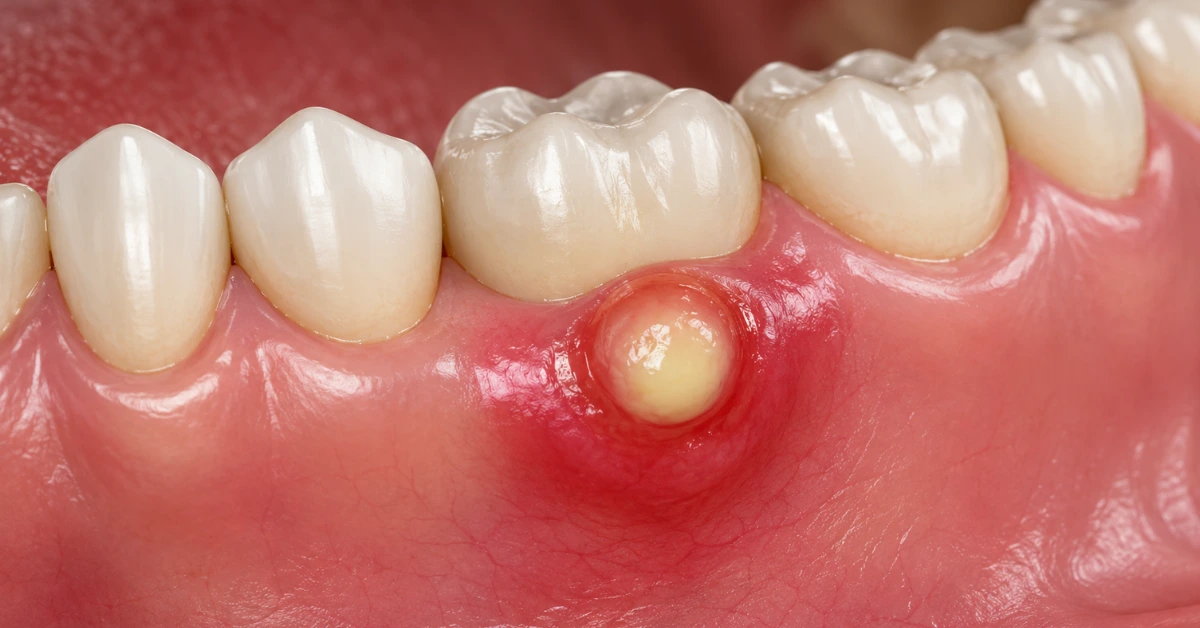
An untreated infection in the pulp can spread to surrounding tissue, forming an abscess. At this stage, you’re dealing with pain, swelling, and a situation that often requires either extraction or oral surgery. Tooth replacement – through implants, bridges, or dentures – costs considerably more than any of the treatments that could have addressed the problem earlier.
The math is straightforward, even if the timing feels inconvenient: a routine check-up that catches decay in stage 1 or 2 costs a fraction of the treatment required at stage 4 or 5. The cost of a dental cleaning in Ontario – typically $150 to $300 – is the most efficient investment in avoiding this progression.
What a Dental Exam Reveals That You Can’t See Yourself
Even patients who brush twice daily, floss consistently, and watch their diet walk in with cavities they had no idea were forming. That’s not a failure of oral hygiene – it’s a reflection of what home care simply cannot detect.
Here’s what a professional dental exam catches that the mirror in your bathroom does not:
- Interproximal cavities – decay forming between two teeth where they contact each other. These are completely invisible without X-rays and represent a significant portion of cavities in adults.
- Subgingival decay – cavities forming on root surfaces below the gumline, which are particularly common in patients with any degree of gum recession. They’re also faster-moving than cavities on the crown of the tooth.
- Secondary decay – new decay forming under or around an existing filling. From outside the tooth, there’s often no visible sign until the filling fails or sensitivity increases.
- Early enamel demineralization – white spots that are subtle, positioned in areas difficult to see, or still small enough to remineralize with intervention before they break through the surface.
- Bite surface decay in molars – the pits and fissures on the chewing surfaces of back teeth are the most cavity-prone areas in the mouth and among the hardest to assess without magnification and the right lighting.
Digital X-rays, which The Dental Team uses at all locations, allow us to see decay in its earliest stages – often before any symptom has appeared and before the cavity is visible on the surface. That’s the advantage of the exam: it gives you information you can act on while your options are still good.
Regular dental check-up costs in Ontario vary but typically include an exam and X-rays – a bundle that gives your dentist the full picture of what’s happening across all your teeth, not just the ones you can see in a mirror.
How Regular Cleanings Prevent Cavities From Forming
Prevention is a more precise word than people realize when it comes to dental cleanings. It’s not just about freshness or removing surface stains. Professional cleanings remove plaque and tartar in ways that home care physically cannot – and that removal directly interrupts the decay process before it starts.
Here’s what the cleaning actually does at the level of cavity prevention:
Tartar Removal
Plaque – the soft bacterial film that forms on teeth throughout the day – hardens into tartar (calculus) within 24 to 72 hours if it isn’t fully removed. Once it hardens, no toothbrush or floss can dislodge it. Tartar is a reservoir of acid-producing bacteria, and it keeps those bacteria in sustained contact with your enamel. The only way to remove it is through professional scaling at a dental appointment.
Regular cleanings prevent tartar from accumulating to a point where it’s driving consistent acid exposure at the enamel surface.
Interproximal Plaque
Even conscientious flossers don’t reach every contact point between every tooth perfectly every time. Professional hygiene instruments – including ultrasonic scalers and hand scalers – access areas between teeth and just below the gumline that daily home care misses. That coverage matters, because interproximal surfaces are among the highest-risk locations for cavity formation.
Early Detection – the Other Side of the Cleaning Appointment
The cleaning itself is only half the appointment. The exam that accompanies it is where early cavity detection actually happens. Your hygienist probes gum tissue and notes any changes. Your dentist reviews X-rays, checks each tooth visually, and catches problems while they’re still in their earliest stages.
Patients who come in every six months rarely need root canals for teeth that started as small cavities. Patients who come in every few years often do. The interval matters not just for the cleaning itself but for the exam that comes with it.
Most healthy adults in Ontario benefit from cleanings twice a year. Patients with a history of frequent cavities, dry mouth, gum disease, or other risk factors may benefit from more frequent appointments – something worth discussing directly with your dentist at your next visit.
Frequently Asked Questions About Early Cavity Signs
Can a cavity heal on its own?
Only at one very specific stage. When decay is limited to early demineralization – the white spot phase where enamel minerals have begun to leach out but the surface is still physically intact – remineralization is possible. Fluoride treatments, remineralizing toothpastes, and reducing sugar exposure can help the enamel restore some of its mineral content and potentially arrest the decay. Once the enamel surface has broken, there is no self-healing. The cavity requires a filling.
How fast do cavities progress?
That depends on several factors: the bacteria in your mouth, how often you consume sugars and acids, your saliva production, your oral hygiene consistency, and whether you’re getting regular cleanings. In general, a cavity through enamel can take anywhere from 6 months to several years to develop in a healthy adult. Once it reaches dentin, progression speeds up – dentin is softer and less resistant than enamel. Dry mouth (which reduces the saliva that naturally neutralizes acid) significantly accelerates decay.
Does a cavity always hurt?
No – and this is the most dangerous misconception about tooth decay. Early cavities, and even mid-stage cavities, frequently cause no pain at all. Pain typically starts when decay reaches the dentin layer and intensifies when it reaches the pulp. By the time a cavity causes persistent or spontaneous pain, it has usually progressed well beyond the stage where a simple filling resolves it.
What does an early cavity look like on a tooth?
The earliest visible sign is a white, chalky, dull spot on the enamel surface – different from the translucent white of healthy enamel. As decay progresses, that spot may darken to yellow, brown, or black. On the chewing surfaces of back teeth, early decay often appears as dark spots in the natural grooves or pits. Near the gumline, it may appear as a darkened band. Between teeth, it typically isn’t visible at all without X-rays.
What is the white spot on my tooth?
A white spot on a tooth can indicate early enamel demineralization – the first visible sign of a developing cavity. It can also result from fluorosis (too much fluoride exposure during tooth development), orthodontic treatment, or enamel hypoplasia. The distinction matters for how it’s treated. A dentist can assess whether the spot represents active decay, arrested decay, or a developmental variation – and recommend whether monitoring, remineralization therapy, or a filling is appropriate.
Are cavities between teeth common?
Yes. Interproximal cavities – those forming on the contact surfaces between adjacent teeth – are extremely common and represent a large percentage of cavities found in adults. They’re invisible without X-rays, and they can progress significantly before causing any noticeable symptoms. This is one of the primary reasons dental X-rays at regular intervals remain important even for patients with good oral hygiene habits.
If I have sensitive teeth, does that mean I have a cavity?
Not necessarily. Tooth sensitivity can result from enamel erosion (often from acidic foods and drinks), gum recession that exposes root surfaces, worn fillings, teeth grinding, or simply naturally porous enamel. However, sensitivity that is new, localized to one tooth, or triggered specifically by sweets is more suggestive of decay than generalized sensitivity across multiple teeth. When in doubt, have it checked – the difference between “this is just sensitivity” and “this is early decay” has real treatment implications.
How much does it cost to treat a cavity early vs. later?
A small, single-surface filling in Ontario typically runs $120 to $250. A larger multi-surface filling runs $250 to $400 or more. A root canal on a molar costs $800 to $1,500, and most root canal-treated teeth then need a crown, adding another $1,000 to $1,800. Dental filling costs in Ontario scale significantly with how far the decay has progressed – making early detection the most cost-efficient approach by a considerable margin.
Book a Dental Check-Up Before the Early Signs Become Something Bigger
The signs of an early cavity are worth knowing. But knowing them only helps if you act on them – and acting on them early is what keeps a small, manageable problem from becoming a significantly larger one.
If you’ve noticed any sensitivity, a white or dark spot, a rough patch, or persistent bad breath that doesn’t resolve with your regular routine, don’t wait for it to hurt before calling. Pain is a late signal. The early signals are the ones that give you options.
The Dental Team has locations across Milton, Mississauga, and Brampton. We accept CDCP coverage and most private insurance plans. Our team will take X-rays, complete a thorough exam, and give you a clear picture of what’s happening – before the conversation gets more complicated than it needs to be.
Contact The Dental Team for more information about compassionate dental care services – or book directly at the location nearest to you.