A gum abscess is not something to wait on. It will not resolve on its own, it will not get better with rinsing and hoping, and the window between “manageable infection” and “spreading emergency” is shorter than most people expect. Here’s what it is, what it means, and what to do right now.
A gum abscess is a pocket of pus that forms in the tissue surrounding a tooth, caused by a bacterial infection. The pain, swelling, and throbbing you feel are your body fighting that infection – and losing ground without treatment. If you’re in Milton, Mississauga, or Brampton and you think you have one, The Dental Team prioritizes same-day emergency appointments. Don’t wait for this one.
What Is a Gum Abscess?
An abscess is an infection that the body has attempted to wall off. Bacteria invade tissue, your immune system sends white blood cells to fight back, and the result of that battle – dead bacteria, dead white blood cells, and fluid – accumulates as pus. When that happens in your gum tissue, it’s a gum abscess.
There are two types worth knowing, because they have different causes and slightly different treatment paths:
- Periodontal abscess – forms in the gum tissue and the space between the tooth and the surrounding gum (called the periodontal pocket). This type is most commonly associated with gum disease, where bacteria have built up deep in gum pockets over time. It can also result from a foreign object – a popcorn hull, a toothpick fragment – getting trapped below the gumline.
- Periapical abscess – forms at the root tip of a tooth. This one originates inside the tooth itself, when decay or damage has allowed bacteria to reach the pulp (the nerve and blood vessel tissue at the tooth’s core). The infection travels down through the root and breaks out into the surrounding bone and gum tissue.
In plain language: a periodontal abscess starts outside the tooth, in the gum. A periapical abscess starts inside the tooth and works outward. Both are infections. Both require professional treatment. Both can become dangerous if ignored.
Symptoms That Confirm It’s an Abscess
Gum irritation is common. A sore spot after aggressive brushing, temporary sensitivity after eating something sharp, mild swelling that clears up in a day – these are normal dental life. An abscess is different. Here’s how to tell the difference between irritation and infection.
Throbbing, Persistent Pain
Abscess pain has a distinctive quality: it throbs. It pulses. It doesn’t come and go based on what you’re eating – it’s there at rest, it’s there at night, it may wake you up. It can radiate to the jaw, the ear, or the neck on the same side as the affected tooth. If your tooth or gum has been throbbing for more than a day or two without letting up, that pattern is consistent with an abscess.
Visible Swelling or a Pimple-Like Bump on the Gum
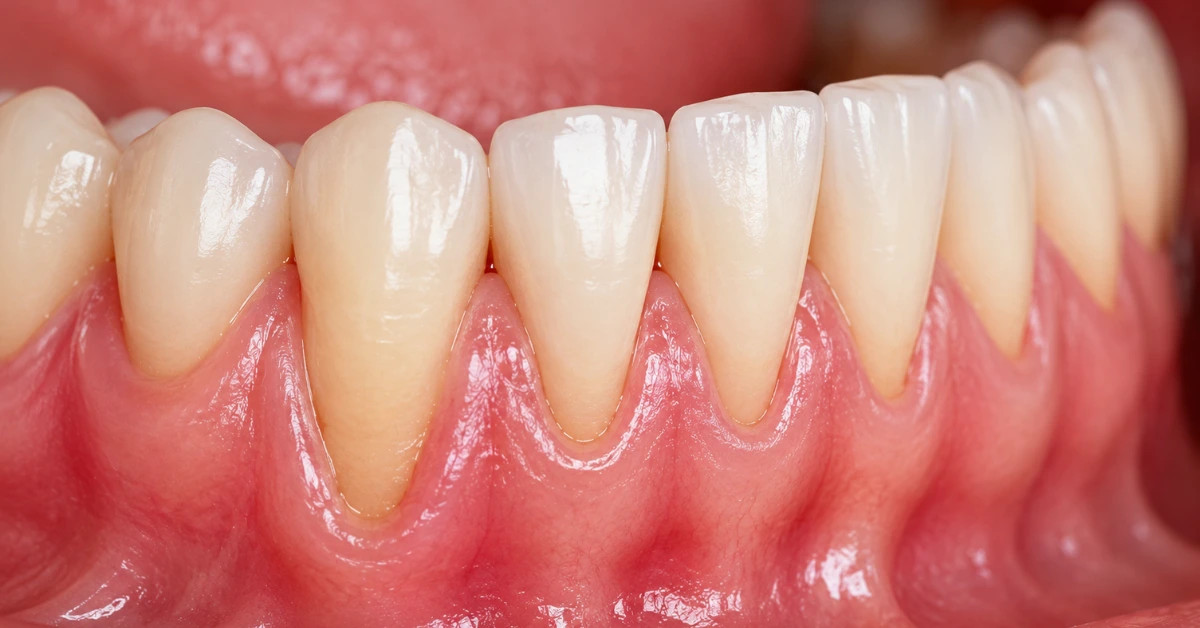
A periodontal abscess often produces a visible, raised bump on the gum – sometimes described as looking like a pimple. This bump may be tender to touch and can appear red or shiny. In some cases it develops a white or yellow tip where the pus has accumulated close to the surface. Do not attempt to pop or drain it yourself. More on why that matters in the next section.
Sensitivity to Pressure and Temperature
Biting down on the affected side produces sharp pain. Cold and heat both trigger reactions. The tooth may feel slightly elevated – like it’s sitting higher than it should – because pressure from the infection is pushing it up in the socket.
Foul Taste or Smell
If you notice a sudden, persistent bad taste in your mouth – bitter, sour, or foul – especially if it doesn’t clear with brushing, it may indicate that the abscess has partially drained on its own. This does not mean the infection is resolving. It means the pressure has released, but the bacteria and the source of the infection are still present and still spreading.
Fever and General Illness
A fever above 38°C (100.4°F) alongside dental pain, or a general feeling of being unwell – fatigue, chills, difficulty swallowing – are signals that the infection has moved beyond the localized site. This is a more urgent situation. Swelling that is spreading into the face, jaw, or neck, or any difficulty breathing or swallowing, requires emergency care – go directly to an emergency room if your dentist cannot see you immediately.
What NOT to Do: Why Popping a Gum Abscess Is Dangerous
The instinct makes sense. There’s a visible bump, there’s pressure, and the idea of releasing that pressure feels like it would bring relief. It won’t – not safely, and not without making things significantly worse.
Attempting to pop or drain a gum abscess at home introduces unsterilized fingers, nails, or instruments directly into an active infection site. Rather than draining the bacteria out, you risk pushing them deeper into surrounding tissue and creating new entry points for infection to spread. The skin and mucous membrane overlying the abscess are one of the few barriers your body has between the infection and your bloodstream.
In rare but documented cases, this kind of spreading infection has reached facial spaces near the airway, the jaw, and in extreme cases, areas near the brain. A condition called Ludwig’s angina – a rapidly spreading infection of the floor of the mouth – can develop from an untreated or improperly handled dental abscess, and it is a life-threatening emergency. Sepsis, where bacteria enter the bloodstream and trigger a body-wide inflammatory response, is another documented complication of untreated dental infections.
For a full breakdown of what happens when dental infections are left untreated or handled incorrectly, our article on whether you should pop a gum abscess covers the risks in detail.
What you can do at home while waiting for your appointment:
- Rinse with warm salt water – half a teaspoon of salt in a cup of warm water, swished gently for 30 seconds. This won’t treat the infection, but it can reduce bacteria at the surface and provide mild comfort.
- Take over-the-counter pain relief – ibuprofen (if appropriate for you) reduces both pain and inflammation. Follow label directions.
- Avoid very hot or very cold foods and drinks on the affected side.
- Do not apply aspirin directly to the gum – this is a common home remedy that causes tissue burns without any benefit to the infection.
These are temporary measures only. None of them treat the underlying infection. Call your dentist the same day.
How a Gum Abscess Is Treated at the Dentist
Treatment depends on which type of abscess you have and how far the infection has progressed, but the core goals are the same: drain the infection, eliminate the source, and protect surrounding tissue from further damage.
Drainage
The first priority is releasing the pressure and removing the pus. Your dentist will numb the area, make a small incision in the abscess, and allow the infection to drain. The site is then irrigated with an antimicrobial solution to clear remaining bacteria. This step brings immediate relief from the pressure and pain, and it removes the active pus pocket – but it is the beginning of treatment, not the end.
Antibiotics
Antibiotics may be prescribed depending on the severity of the infection and whether there are signs of spreading – fever, swollen lymph nodes, facial swelling. It’s important to understand what antibiotics can and cannot do here: they reduce bacterial load in the surrounding tissue, but they cannot penetrate effectively into a tooth’s pulp chamber or a walled-off abscess. This is why drainage and addressing the tooth itself are essential – antibiotics alone do not resolve a dental abscess.
Treating the Source: Root Canal or Extraction
For a periapical abscess (originating inside the tooth), the source of infection is the pulp. Treatment involves either root canal therapy – cleaning out the infected pulp, disinfecting the canals, and sealing the tooth – or extraction if the tooth is too damaged to save. Root canal therapy preserves the natural tooth and is the preferred outcome when the tooth structure supports it. The dangers of extracting an abscessed tooth without proper care are real, which is why this decision is made after a full clinical assessment.
For a periodontal abscess (originating in the gum tissue), treatment focuses on cleaning the periodontal pocket. This typically involves scaling and root planing – a deep cleaning procedure that removes bacteria, calculus, and infected tissue from below the gumline. In more advanced cases, periodontal surgery may be necessary to access and clean areas that instruments cannot reach.
Follow-Up Care
An abscess that has been drained and treated still requires monitoring. Your dentist will schedule follow-up to confirm the infection has resolved, assess the surrounding bone (particularly if the abscess was deep or long-standing), and discuss any longer-term treatment – crown placement after root canal, periodontal maintenance, or other restorative work the tooth requires.
What Happens If You Ignore a Gum Abscess
Dental infections do not plateau. An abscess that isn’t draining and isn’t being treated is an active, growing bacterial colony. Here is the realistic progression if it goes unaddressed.
The Infection Spreads Locally
Bacteria move from the abscess site into the surrounding periodontal tissue and bone. Bone loss around the affected tooth accelerates. Adjacent teeth become involved. What started as a single-tooth problem becomes a multi-tooth, multi-site infection that is significantly more complex and expensive to treat.
Facial and Jaw Involvement
As the infection spreads beyond the immediate tooth and gum site, swelling extends into the cheek, jaw, and potentially the neck. Swollen lymph nodes under the jaw are often the first sign of this spread. At this stage, the infection is no longer a dental problem in isolation – it is a soft tissue infection with systemic implications.
Systemic Infection Risk
Bacteria from an oral abscess can enter the bloodstream – a process called bacteremia. In most healthy adults, the immune system clears transient bacteremia without consequences. But when bacteremia is sustained – as it can be with an ongoing, untreated dental infection – the risk of serious systemic complications rises. Bacterial endocarditis (infection of the heart valves), pneumonia from aspirated oral bacteria, and sepsis are all documented complications of untreated dental infections, though they are not common outcomes for otherwise healthy individuals who seek care promptly.
The point isn’t to alarm you. The point is that none of this is unpredictable or unpreventable. Every one of these outcomes is avoided by the same thing: calling a dentist the day you notice symptoms consistent with an abscess, and getting seen.
Our emergency dental care team across Milton, Mississauga, and Brampton is set up to handle exactly this situation, same day.
Frequently Asked Questions About Gum Abscesses
Is a gum abscess a dental emergency?
Yes. A gum abscess should be treated as a dental emergency and seen the same day if possible. Dental infections can spread rapidly and unpredictably – what is a localized infection today can involve the jaw, face, or airway within days if untreated. Most dental offices, including all Dental Team locations, prioritize patients with suspected abscesses for same-day or next-day appointments. Do not wait for a routine appointment slot if you have symptoms consistent with an abscess: throbbing pain, visible swelling, fever, foul taste, or difficulty swallowing.
Can popping a gum abscess kill you?
In extreme cases, yes – though this outcome is rare and requires a combination of factors. Popping an abscess at home risks spreading bacteria into deeper tissue and potentially into the bloodstream. In documented cases, dental infections that spread through facial tissue planes have blocked airways or led to sepsis, both of which can be fatal without immediate medical intervention. The risk is not hypothetical, but it is not inevitable either. What’s certain is that attempting to pop a gum abscess makes the situation worse, not better, and delays the professional care that is the only reliable solution.
What home remedy helps a gum abscess?
No home remedy treats a gum abscess. There are measures that can reduce discomfort while you wait for a dental appointment – warm salt water rinses, over-the-counter ibuprofen, avoiding temperature extremes on the affected side – but none of these address the bacterial infection itself. Clove oil, hydrogen peroxide rinses, and garlic are frequently cited online as remedies. At best, they offer very temporary surface-level relief. At worst, they delay people from getting care while the infection progresses. A gum abscess requires professional drainage and treatment of the source. There is no substitute.
How long does gum abscess treatment take?
The initial appointment – drainage and assessment – typically takes 45 to 90 minutes. Relief from the pressure and acute pain usually comes within hours of drainage. Antibiotics, if prescribed, take 24 to 48 hours to begin reducing systemic bacterial load noticeably. Full resolution depends on the type and severity of the abscess and what follow-up treatment is required. A simple periodontal abscess that is drained and treated with a deep cleaning may resolve within a week or two. A periapical abscess requiring root canal therapy involves one to two treatment appointments over one to four weeks, with a crown placement typically four to six weeks after that.
If You Have a Gum Abscess, Call Us Today
The Dental Team prioritizes same-day emergency appointments across our locations in Milton, Mississauga, and Brampton . If you have throbbing pain, visible swelling, a bump on your gum, a foul taste, or a fever alongside dental pain – call now. Don’t manage symptoms over the weekend and hope it settles. It won’t.
We accept CDCP coverage and most private insurance plans. Our team will assess the abscess, provide immediate drainage and pain relief, and walk you through the full treatment plan before any work begins – so you know exactly what’s involved and what it will cost before we start.
Contact The Dental Team for more information about compassionate dental care services, or find the location nearest to you and book directly.