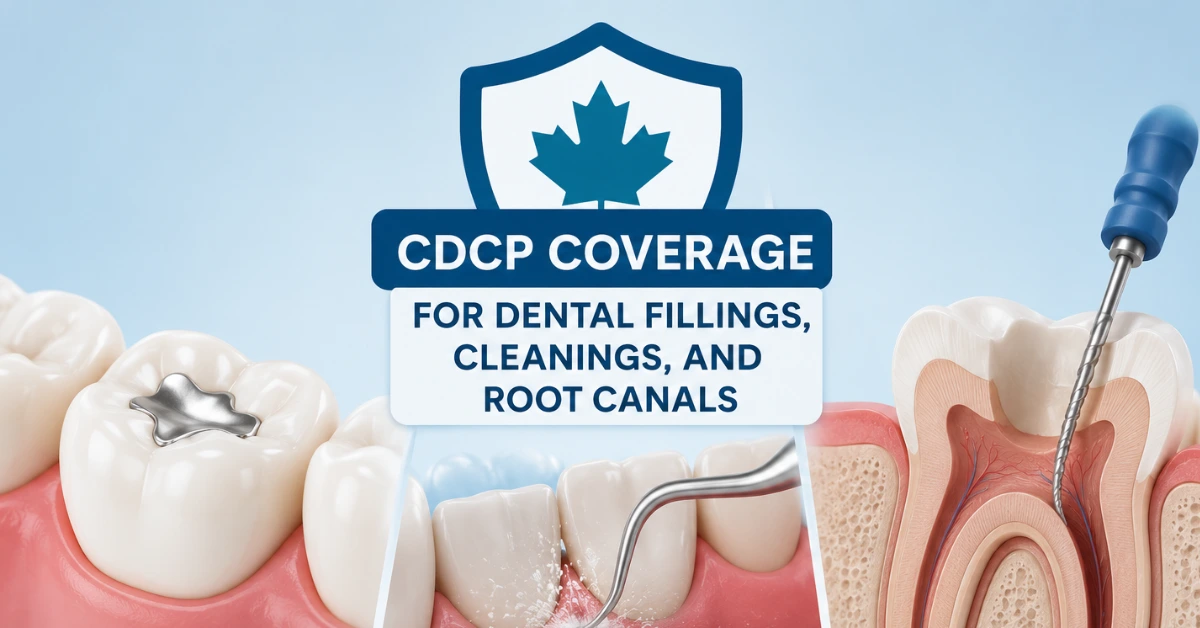
The Canadian Dental Care Plan covers a wide range of dental services across seven categories: preventive care, basic restorative work, endodontic treatment, periodontal services, major restorative procedures, oral surgery, and sedation. For most routine and medically necessary dental care, coverage exists under the plan. Cosmetic procedures, dental implants, and orthodontic treatment are not covered.
But knowing the category list is different from knowing whether your specific upcoming treatment is covered, how the fee your dentist charges compares to what the CDCP will actually reimburse, and which procedures need government pre-approval before your dentist can proceed. Those are the details that determine what you pay – and they are rarely explained clearly. This article translates each coverage category into plain patient terms, flags what is commonly assumed to be covered that is not, and walks through how the preauthorization process works so you are not caught off guard.
The Dental Team accepts CDCP patients at our Milton, Mississauga, and Brampton locations. Before your appointment, our front desk team reviews your treatment plan against your CDCP coverage and flags any potential out-of-pocket costs – so you know what to expect before anything begins.
How Does CDCP Coverage Actually Work?
When you attend an appointment at a registered CDCP provider, your dentist bills Sun Life directly for covered services. You do not pay the full cost upfront. Depending on your household income, you may owe a co-payment – and if your dentist charges more than the CDCP’s established fee schedule for a given service, you pay that difference regardless of income level.
Two things catch patients off guard most often. First, the CDCP has its own fee guide – a schedule of what it will pay for each procedure code. Many dental offices in Ontario charge above those rates. Second, some services require preauthorization: Sun Life must approve them before your dentist can proceed and bill the plan. If preauthorization is required and your dentist skips that step, the claim may be denied.
Your dentist’s office manages both the billing and preauthorization process on your behalf. A good office confirms your coverage, checks for preauthorization requirements, and tells you about any expected out-of-pocket costs before treatment starts. Always ask before saying yes to any procedure.
For a breakdown of how co-payments work by income tier, see our complete CDCP guide.
Preventive and Diagnostic Services: What Gets Covered
Preventive and diagnostic care is the most-used category under the CDCP, and it is the most straightforwardly covered. These services are designed to catch problems early and keep your teeth and gums healthy – and the CDCP covers all of them for eligible patients.
Covered under this category:
- Dental exams: Complete exams, routine recall exams, specific exams for a particular concern, and emergency exams are all covered. Your provider determines which type of exam applies at each visit.
- X-rays: Diagnostic imaging is covered, though frequency limits apply. You cannot receive the same type of x-ray series repeatedly in a short window without preauthorization.
- Dental cleanings (scaling): Professional dental cleanings are covered. Frequency limits apply – typically two per year for adults under standard coverage.
- Fluoride treatments: Covered for eligible patients. Age and frequency limits may apply depending on the patient profile.
- Sealants: Covered, typically for children and younger patients where preventive sealant application is clinically indicated.
Frequency limits are a rolling window, not a calendar year. If your last covered cleaning was April 1, 2025, the CDCP considers you eligible for the next one on April 2, 2026 – not January 1, 2026. Your provider confirms exact eligibility windows before submitting a claim.
Fillings and Basic Restorative Services: What Gets Covered
When a cavity develops, the CDCP covers the treatment needed to address it. This category handles the most common repair work in dentistry – the procedures most patients associate with a standard dental visit.
Covered under this category:
- Permanent fillings: Dental fillings to treat cavities are covered. The material type (amalgam vs. composite) may affect coverage depending on the tooth location and clinical indication.
- Temporary fillings: Covered when used as part of a broader treatment plan, such as while waiting for a crown or between appointments for a multi-stage procedure.
- Pain control for diseased teeth: Treatment to manage discomfort from an infected or damaged tooth is covered as part of this category.
- Other cavity treatments: Additional procedures to address decay that falls outside standard fillings can also be covered when clinically recommended.
One question patients frequently ask: does getting a filling covered mean the crown that might follow is also covered? Not automatically. Crowns fall under a separate category (major restorative services) and require preauthorization. Coverage for a filling does not guarantee coverage for the crown – those are assessed separately.
Root Canal Treatment: What Gets Covered
Root canal treatment is covered under the CDCP’s endodontic services category. For patients who have been putting off treatment because of cost, this is one of the more significant inclusions in the plan.
Covered under this category:
- Root canal treatments: Initial root canal treatment on a tooth is covered when clinically recommended by your provider.
- Pulpectomies: The first stage of a root canal (removal of the pulp) is covered as part of the endodontic category.
- Infection management: Procedures to reduce infection and relieve acute pain are covered.
- Root canal re-treatments: If a previously completed root canal requires re-treatment, coverage is available – but preauthorization is required before proceeding.
A common patient question: if my root canal is covered, is the crown that goes on top of it also covered? The root canal itself, yes. The crown is a separate procedure under major restorative services and requires its own preauthorization. Do not assume the crown is included just because the root canal was approved.
Gum Disease Treatment: What Gets Covered
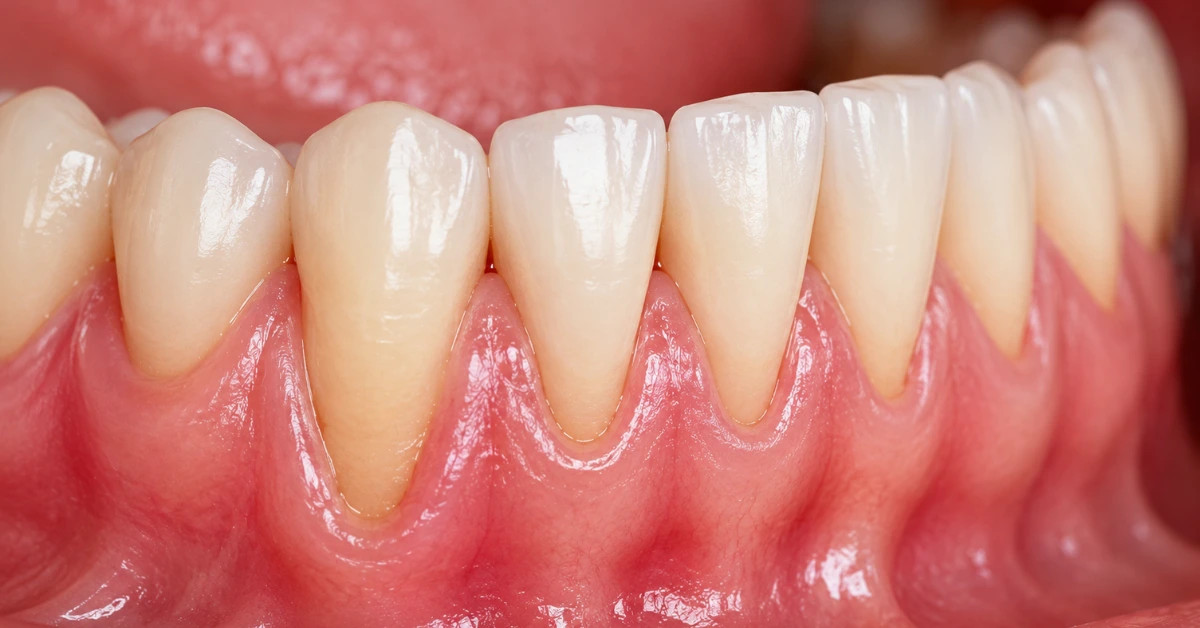
Periodontal services cover treatment for the gums and the bone structure that supports your teeth. This is a category that matters a great deal for patients who have avoided treatment because of cost – advanced gum disease is one of the leading reasons adults lose teeth.
Covered under this category:
- Scaling below the gumline: Deep cleaning that goes below the gumline to remove buildup from root surfaces is covered as part of periodontal gum treatment. This is different from a standard cleaning – it is a more involved procedure for patients with active gum disease.
- Treating abscesses: Draining and treating gum abscesses is covered.
- Non-surgical gum disease management: Conservative, non-surgical approaches to managing periodontal disease are covered when clinically indicated.
- Post-surgical evaluations: Follow-up care after gum surgery requires preauthorization to be covered.
- Bonding for mobile teeth: Stabilizing teeth that have loosened due to gum disease requires preauthorization.
Crowns and Major Restorative Services: What Gets Covered
Major restorative services address teeth that are too damaged to be fixed with a standard filling. This category has the most preauthorization requirements of any in the CDCP – plan for extra lead time when these procedures are part of your treatment.
Covered under this category:
- Crowns: Dental crowns are covered when a tooth is too damaged to restore with a filling alone – but preauthorization is required before your dentist can proceed. Sun Life reviews the clinical case and approves or declines before treatment begins.
- Cores: The internal build-up that supports a crown is covered with preauthorization.
- Posts: Posts placed inside the root to anchor a crown are covered with preauthorization.
- Crown repairs and re-bonding: Repairs to existing crowns and re-bonding of crowns or posts are covered – and these do not require preauthorization in most cases.
The preauthorization process for crowns involves your dentist submitting clinical documentation to Sun Life before booking the procedure. Decisions are based on your oral health history and the clinical justification provided. Not every request is approved – and if preauthorization is denied, you can still choose to proceed and pay out of pocket.
Dentures: What Gets Covered
The CDCP covers several types of dentures and related services. For patients who have been missing teeth and managing without replacement options due to cost, this coverage is meaningful.
Covered under this category:
- Complete dentures: Standard complete dentures replacing a full arch of teeth are covered without preauthorization in most cases.
- Temporary dentures: Immediate dentures placed right after extractions are covered.
- Denture repairs and relines: Repairs to existing dentures and relining procedures to improve fit are covered.
- Tissue conditioning: Placing a soft lining inside dentures to condition the oral tissues – often needed before permanent relines – is covered.
- Partial dentures: Partial dentures replacing some but not all teeth require preauthorization.
- Complete immediate and overdentures: These also require preauthorization before proceeding.
One thing patients ask: does the CDCP cover dental implants? No – dental implants are not covered under the CDCP. The plan covers dentures and bridges as tooth replacement options, but implants fall outside its scope entirely. If you are weighing replacement options, speak with your provider about what the plan covers for your specific situation.
Tooth Extractions and Oral Surgery: What Gets Covered
When a tooth cannot be saved, the CDCP covers removal and related surgical procedures. This is a category that matters for patients dealing with infected, broken, or impacted teeth who have been putting off treatment.
Covered under this category:
- Simple tooth extractions: Standard removal of a tooth and its root is covered when clinically indicated.
- Surgical extractions: More complex removals – including wisdom teeth removal – are covered when a surgical approach is required.
- Removal of cysts and tumours: Surgical removal of soft tissue growths in the mouth is covered.
- Incisions and drainage: Draining infections through surgical incision is covered.
- Jaw fracture treatment: Procedures to address broken jaw bones are covered.
Wisdom teeth removal under the CDCP follows the same rule as other surgical procedures: coverage applies when the extraction is clinically indicated and your provider documents the clinical need. If your wisdom teeth are impacted or causing active problems, coverage is available. Elective removal without clinical justification would not be covered.
Sedation and Anesthesia: What Gets Covered
For patients who experience significant dental anxiety, the CDCP includes coverage for certain types of sedation. This makes treatment accessible for patients who might otherwise avoid the dentist entirely because of fear.
Covered under this category:
- Nitrous oxide (laughing gas): Covered without preauthorization when used during a procedure.
- Oral sedation: Covered without preauthorization when clinically appropriate.
- Nitrous oxide and oral sedation combined: Also covered without preauthorization.
- Conscious sedation: Inhalation or combined technique requires preauthorization.
- Deep sedation or general anesthesia: Both require preauthorization before the procedure can be scheduled and billed to the plan.
For patients who need deeper sedation for complex procedures or significant anxiety, the preauthorization process allows Sun Life to review the clinical justification before approval. Your provider submits the request – you do not do this yourself.
What Does the CDCP Not Cover?
Understanding what the plan excludes is just as important as knowing what it includes. These are the most common services patients assume are covered but are not:
- Teeth whitening: Cosmetic whitening procedures are not covered under any circumstances. The CDCP covers oral health treatment, not aesthetic improvement.
- Dental implants: Implants are excluded entirely. The plan covers dentures and bridges as tooth replacement, but not implants or implant-supported restorations.
- Orthodontics (braces and clear aligners): Orthodontic treatment is not currently available under the CDCP. The government has indicated a limited range of orthodontic services will be added at a future date – but no timeline has been confirmed as of this writing.
- Veneers for cosmetic purposes: Cosmetic veneers are not covered. Restorations that are clinically necessary may be covered depending on the clinical indication and documentation.
- Services your provider charges above the CDCP fee schedule: This is not an exclusion exactly, but it works like one. If your dentist charges $350 for a procedure the CDCP covers at $220, the $130 difference is billed to you directly – regardless of your income or co-payment level. Always ask about fee schedule alignment before agreeing to treatment.
- Services beyond frequency limits (without preauthorization): If you have had a covered service recently – a cleaning, an x-ray series, an exam – the CDCP will not cover the same service again until the frequency window has passed, unless preauthorization is granted for exceptional circumstances.
What Is Preauthorization and How Does It Work?
Preauthorization is the process by which your dental provider requests advance approval from Sun Life before performing certain procedures and billing them to the CDCP. It is not optional for the services that require it – if your dentist skips this step for a preauthorization-required procedure, the claim will not be covered.
Your dentist’s office initiates the preauthorization request on your behalf. They submit clinical documentation – including x-rays, treatment notes, and the proposed procedure codes – to Sun Life for review. The decision considers your oral health history, medical conditions, and whether the proposed treatment meets the CDCP’s clinical criteria.
Not every request is approved. If preauthorization is denied, you have a few options: your provider can appeal the decision with additional clinical documentation, you can proceed with a different covered treatment, or you can choose to have the procedure done and pay out of pocket. A denial does not mean your dentist was wrong to recommend it – it means the plan’s criteria were not met based on the information reviewed.
Procedures that commonly require preauthorization:
- Crowns, cores, and posts
- Partial dentures and overdentures
- Root canal re-treatments
- Conscious sedation and deep sedation/general anesthesia
- Post-surgical gum evaluations
- Bonding for mobile teeth
- Services beyond frequency limits
Bottom Line
The CDCP covers most routine and medically necessary dental care – cleanings, fillings, root canals, gum treatment, extractions, dentures, and sedation. It does not cover implants, orthodontics, whitening, or cosmetic veneers. Some major procedures require preauthorization before your dentist can proceed, and the CDCP fee schedule may be lower than what your provider charges, which creates potential out-of-pocket costs even when a service is technically covered.
The Dental Team is a registered CDCP provider in Milton, Mississauga, and Brampton. We review your coverage before your appointment, flag any preauthorization requirements, and let you know about potential costs before treatment begins. Contact us to book or to confirm what your plan covers ahead of your next visit. For full eligibility details, see our complete CDCP guide. To understand who qualifies, see our CDCP eligibility guide.
Frequently Asked Questions
What does the Canadian Dental Care Plan cover?
The Canadian Dental Care Plan covers seven categories of dental services: preventive and diagnostic care (exams, cleanings, x-rays, fluoride, sealants), basic restorative work (fillings), endodontic services (root canals), periodontal treatment (gum disease care), major restorative services (crowns, dentures), oral surgery (extractions, wisdom teeth), and sedation. Most routine and medically necessary dental care falls within these categories.
Does the CDCP cover dental cleanings?
Yes, the CDCP covers dental cleanings (scaling) as part of its preventive and diagnostic services category. Frequency limits apply – typically two cleanings per year for most adults. Your provider checks your coverage window before submitting a claim to confirm you are within the eligible period.
Does the CDCP cover root canals?
Yes, the CDCP covers initial root canal treatment when clinically recommended. Root canal re-treatments on teeth that have already had a root canal require preauthorization. The crown that often follows a root canal is a separate procedure under major restorative services and requires its own preauthorization – it is not automatically covered alongside the root canal.
Does the CDCP cover dental implants?
No, dental implants are not covered under the Canadian Dental Care Plan. The plan covers dentures and bridges as tooth replacement options, but implants and implant-supported restorations are excluded entirely.
Does the CDCP cover wisdom teeth removal?
Yes, the CDCP covers wisdom teeth removal when it is clinically indicated and documented by your provider. Simple and surgical extractions are both covered within the oral surgery category. The clinical need must be clear from the documentation your dentist submits.
What is preauthorization under the CDCP and which procedures need it?
Preauthorization under the CDCP is advance approval from Sun Life that your dentist must receive before performing certain procedures and billing them to the plan. Your dentist’s office submits the request – you do not do this yourself. Procedures that require preauthorization include crowns, partial dentures, root canal re-treatments, conscious sedation, deep sedation or general anesthesia, and services beyond standard frequency limits.
What happens if my dentist charges more than the CDCP fee schedule?
If your dentist charges more than the CDCP established fee for a service, you pay the difference directly to your dental office – regardless of your income level or co-payment bracket. This is separate from any co-payment that may apply based on household income. Always ask your provider whether their fees align with the CDCP schedule before agreeing to treatment.