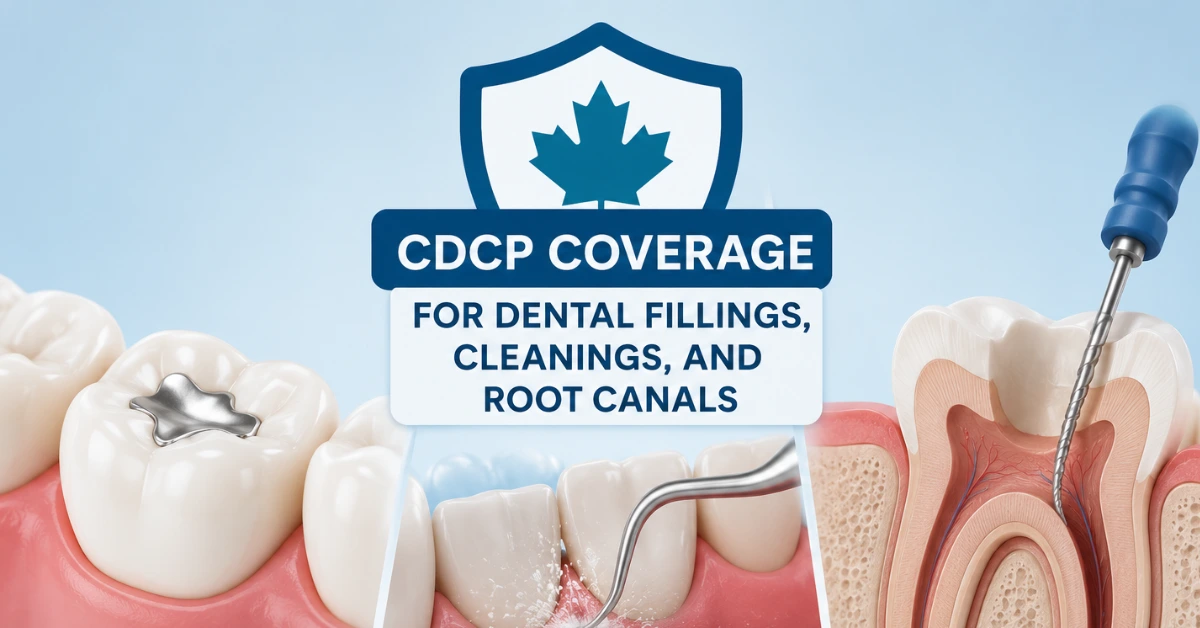
The Canadian Dental Care Plan (CDCP) is a federal government program that provides dental coverage to Canadians who have no private dental insurance and earn less than $90,000 per year. It covers a wide range of services – from cleanings and fillings to root canals and dentures – and works through direct billing between your dental provider and Sun Life, the plan’s administrator. You do not pay the full cost upfront for covered services.
But understanding the CDCP well enough to actually use it takes more than a quick read of the eligibility table. There is a meaningful difference between being eligible and being enrolled. Many Canadians who qualify have never activated their coverage. Others have lost it without realizing it. And several common situations – opting out of employer insurance, sharing a household with someone who has coverage, or receiving the old Canada Dental Benefit – create confusion that leads to missed care. This guide works through all of it in plain language.
The Dental Team accepts CDCP patients at our Milton, Mississauga, and Brampton locations. If you have your member card and want to know what it covers before you book, call any of our offices and we will walk you through it before your appointment.
Eligible vs. Enrolled: A Distinction That Matters
This is the most common source of confusion around the CDCP, and it trips up a lot of patients before their first visit.
Being eligible means you meet the income, insurance, and residency criteria. Being enrolled means you have gone through the activation process with Sun Life and received your member card. The two are not the same, and you cannot use the plan until you are enrolled – regardless of whether you qualify.
The government assesses eligibility automatically using your tax return. If you qualify, you receive an invitation letter by mail or through your My Service Canada Account. You then complete enrollment through Sun Life. Once enrolled, you get a welcome package with your member card – and that card is what your dental provider needs to bill the plan on your behalf.
If you believe you qualify but never received an invitation, contact Service Canada directly. Eligibility is reassessed each year based on your filed taxes, which means your status can change – in either direction – from one year to the next.
Who Qualifies for the Canadian Dental Care Plan?
To qualify, you must meet all four of the following at the same time:
- No access to private dental insurance: This includes coverage through an employer, a spouse’s plan, a pension plan, or a private insurer. Access – not use – is what disqualifies you. If your employer offers dental benefits and you opted out, you are still considered to have access.
- Adjusted family net income under $90,000: This is calculated from your tax return. Depending on your income, coverage may be full or partial.
- Tax return filed: You and your spouse or common-law partner (if applicable) must have filed your most recent return and received a notice of assessment.
- Canadian residency: You must be a resident of Canada for tax purposes – a citizen, permanent resident, or protected person.
For a full breakdown of the eligibility table, co-payment tiers, and income calculation details, see our complete CDCP guide.
The Private Insurance Opt-Out Trap
This catches more people than almost any other eligibility issue. If your employer offers a dental benefit plan and you chose not to enroll in it – to save on premiums, because you thought you would not use it, or for any other reason – you are still considered to have access to private insurance. That disqualifies you from the CDCP.
The same applies if your spouse has dental coverage through their employer and you are eligible to be added to it, even if you never joined. Access is the standard, not participation.
If your employment status changes and you genuinely lose access to private insurance, your CDCP eligibility may change. That is reassessed annually when you file your taxes.
Are Children and Seniors Covered?
Children under 18 who are dependants of an eligible adult can be covered, provided they do not have their own access to private dental insurance or another government program. They are covered under the same enrollment as the eligible adult in the household.
Seniors 65 and over are covered under the same eligibility criteria. For a detailed look at how the CDCP applies to seniors specifically – including timing, covered services for older adults, and what the rollout looked like – see our guide to seniors dental coverage in Canada.
What Does the Canadian Dental Care Plan Cover?
The CDCP covers a broad range of oral health services across seven categories: diagnostic and preventive care, basic and major restorative work, endodontic services (root canals), periodontal treatment, removable prosthodontics (dentures), oral surgery, and sedation. Most routine dental care falls within these categories.
Notable inclusions: regular cleanings, exams, fillings, root canals, gum disease treatment, extractions, and dentures. Notable exclusions: cosmetic procedures like teeth whitening, orthodontic treatment (not yet available), and any service your provider charges above the CDCP fee schedule.
Some services – including certain crowns, partial dentures, sedation, and root canal re-treatments – require preauthorization before your provider can proceed. Your dental office handles the preauthorization request with Sun Life; it is not something you submit yourself. Plan for extra lead time when these services are part of your treatment plan.
For the full service-by-service breakdown including which procedures require preauthorization and which do not, the complete CDCP coverage guide has the detail you need.
What Actually Happens at Your Appointment?
This is something most CDCP articles skip entirely, and it leaves patients unprepared for their first visit under the plan.
When you arrive, you present your Sun Life member card to the front desk – the same way you would hand over a private insurance card. Your provider confirms your enrollment is active, checks which services are covered under your plan, and documents the treatment before beginning.
For covered services, your provider bills Sun Life directly. You do not pay the full amount upfront. If a co-payment applies based on your income – 40% if your household earns between $70,000 and $79,999, or 60% if you earn between $80,000 and $89,999 – you pay that portion at the time of your visit.
If your provider charges more than the CDCP established fee for a service, the difference is billed to you regardless of your income level. Before your appointment begins, ask the front desk to flag any services where their fee may exceed the CDCP rate. A good office will do this proactively. At The Dental Team, we confirm coverage details with patients before treatment starts so there are no surprises at checkout.
Is the Canadian Dental Care Plan the Same as the Canada Dental Benefit?
No – and the confusion between them is understandable because both programs existed at the same time during the transition period.
The Canada Dental Benefit was a temporary program launched in 2022. It sent direct payments to parents of children under 12 who had no private dental insurance. Parents applied, received a cheque, and used it toward their child’s care. No provider billing was involved – it was cash in hand.
The Canadian Dental Care Plan is the permanent program that followed. It covers a much broader population, covers more services, and works through direct provider billing via Sun Life. The mechanics are completely different.
If you received the Canada Dental Benefit previously, that does not mean you are enrolled in the CDCP. The two programs have separate application and enrollment processes. You need to go through the CDCP enrollment independently, even if you used the benefit before.
How Do I Apply for the Canadian Dental Care Plan?
In many cases, you do not need to apply in the traditional sense. The federal government uses your filed tax return to assess eligibility automatically. If you qualify, you receive an invitation – by mail or through your My Service Canada Account – to complete enrollment through Sun Life.
The practical steps:
- File your taxes. Eligibility is assessed from your most recent return. If you have not filed, you will not be evaluated.
- Watch for your invitation. Letters go out by mail and through My Service Canada Account. Check both.
- Complete enrollment through Sun Life. This is the step that converts eligibility into active coverage and generates your member card.
- Confirm your dental provider is registered. Call the office before booking. Not every dental provider has enrolled to bill the CDCP.
- Bring your member card to your appointment. Your provider bills Sun Life from there.
If you think you qualify but have not received an invitation, contact Service Canada. Changes in employment, income, or household situation can affect eligibility from year to year, and Service Canada can confirm your current status.
Bottom Line
The Canadian Dental Care Plan provides federally funded dental coverage for Canadians without private insurance who earn below $90,000 per year. Qualifying is step one – but enrolling through Sun Life is what actually activates your coverage. Knowing the difference between those two things, understanding what to expect at your appointment, and confirming your provider is registered will save you from the most common CDCP missteps.
The Dental Team is registered to bill the CDCP at all three locations – Milton, Mississauga, and Brampton. For the full eligibility breakdown, co-payment tables, and covered service details, visit our complete CDCP guide. Or contact us directly and we will answer your questions before you book.
Frequently Asked Questions
What is the Canadian Dental Care Plan, exactly?
The Canadian Dental Care Plan is a federal program that provides dental coverage to eligible Canadians who have no private dental insurance and earn under $90,000 per year. It covers a broad range of dental services through direct billing between registered providers and Sun Life, the plan administrator.
What is the difference between being eligible and being enrolled in the CDCP?
Being eligible means you meet the income, insurance, and residency requirements. Being enrolled means you have completed the activation process with Sun Life and received your member card. You can only use the plan once you are enrolled – eligibility alone is not enough to receive covered services.
Can I use the CDCP if I opted out of my employer’s dental plan?
No – opting out of an employer dental plan does not make you eligible for the CDCP. The plan disqualifies anyone who has access to private dental insurance, and access – not use – is the standard. If your employer offers coverage and you declined it, you are considered to have access and would not qualify.
Does the Canadian Dental Care Plan cover dental cleanings?
Yes, the Canadian Dental Care Plan covers dental cleanings (scaling), along with exams, x-rays, fluoride applications, and sealants as part of its diagnostic and preventive services category. These are among the most commonly used services under the plan.
Do I have to pay anything at my appointment?
It depends on your household income. Families earning under $70,000 pay nothing for covered services at the CDCP rate. Between $70,000 and $89,999, a co-payment applies. If your provider charges more than the CDCP established fee, you pay the difference regardless of income. Always ask your dental office about potential out-of-pocket costs before treatment begins.
Is the Canadian Dental Care Plan the same as the Canada Dental Benefit?
No, the Canadian Dental Care Plan and the Canada Dental Benefit are two separate programs. The Canada Dental Benefit was a temporary program that sent direct cheques to parents of young children. The CDCP is the permanent program with provider billing through Sun Life and a much broader eligible population. Previous use of the benefit does not mean you are enrolled in the CDCP.
How do I find a dentist that accepts the Canadian Dental Care Plan?
To find a dentist that accepts the Canadian Dental Care Plan, call the office directly and ask if they are registered with Sun Life to bill the CDCP. The Dental Team is registered and accepting CDCP patients at our Milton, Mississauga, and Brampton locations.