Your dentist just told you that you need a deep cleaning instead of your regular checkup cleaning. Maybe you heard the words “scaling and root planing” and are not entirely sure what that means. Maybe you are wondering if this is actually necessary or just an upsell. These are fair questions – and the difference between a regular dental cleaning and a deep cleaning is significant enough that you deserve a clear explanation before sitting in the chair.
The short answer: a regular cleaning maintains healthy gums that are already in good shape, while a deep cleaning – also called scaling and root planing – is a treatment for gum disease. They are not interchangeable, and one cannot substitute for the other once gum disease is present. Here is everything you need to know.
What is a Regular Dental Cleaning?
A regular dental cleaning, also called a prophylaxis or “prophy,” is a preventive procedure performed on patients with healthy gums or only mild buildup. Most patients without gum disease visit for a regular cleaning every six months.
During a regular cleaning, your dental hygienist:
- Removes plaque and tartar (calculus) from the surfaces of your teeth above the gumline and just slightly below it – typically up to about 3 millimetres under the gum
- Polishes your teeth with a slightly abrasive paste to remove surface stains and smooth the enamel
- Flosses between your teeth to clear debris from contact areas
- Checks gum pocket depths with a small measuring probe – healthy pockets measure 1 to 3 mm
- Applies fluoride in many cases, to help protect enamel between visits
A regular cleaning typically takes 45 to 90 minutes. It is comfortable for most patients and requires no anesthetic. The goal is maintenance – keeping healthy teeth and gums in good condition and catching any early warning signs – which is why how often you get a cleaning matters as much as the cleaning itself.
Our dental cleaning services at The Dental Team follow this protocol for patients in good gum health across our Milton, Mississauga, and Brampton locations.
What is a Deep Cleaning (Scaling and Root Planing)?
A deep cleaning is a therapeutic procedure – meaning it is treatment for a condition that already exists, not simply maintenance. It is prescribed when a patient has gum disease (periodontitis or advanced gingivitis) and bacteria, plaque, and tartar have accumulated in the pockets below the gumline where a regular cleaning cannot reach.
Scaling and root planing is two steps in one procedure:
- Scaling – The hygienist or dentist uses hand instruments and often an ultrasonic scaler to remove all plaque and tartar deposits from the tooth surfaces and from inside the gum pockets, which may be 4 mm or deeper in patients with gum disease
- Root planing – The root surfaces of the teeth are smoothed out to remove bacterial toxins embedded in the root surface and to create a clean surface that gum tissue can reattach to as healing progresses
Because the procedure involves working below the gumline – sometimes significantly below it – local anesthetic is typically used to keep you comfortable. The mouth is usually divided into quadrants (upper right, upper left, lower right, lower left), and the deep cleaning may be performed one or two quadrants at a time across separate appointments.
After a deep cleaning, your gum pockets should shrink as the tissue heals and reattaches to the cleaned root surfaces. You will typically return for a periodontal maintenance visit 6 to 8 weeks later so your dentist can measure whether your pocket depths have improved.
Key Differences Between Regular and Deep Cleaning
| Feature | Regular Cleaning | Deep Cleaning |
|---|---|---|
| Purpose | Preventive maintenance | Treatment for gum disease |
| Who it is for | Patients with healthy gums | Patients with gum disease (periodontitis) |
| Depth of cleaning | Above gumline and up to ~3mm below | Deep into pockets of 4mm or more |
| Anesthetic needed | Usually not | Yes – local anesthetic in most cases |
| Number of appointments | One appointment | Often 2 appointments (by quadrant) |
| Follow-up required | Routine 6-month recall | Periodontal maintenance visit 6-8 weeks later |
| Root surface work | No | Yes – root planing is included |
| Typical cost | $150 – $350 per visit | $200 – $450+ per quadrant |
When Do You Need a Deep Cleaning?
Your dentist recommends a deep cleaning based on clinical findings – not assumptions. There are specific signs that indicate gum disease has progressed beyond what a regular cleaning can address.
You are likely a candidate for scaling and root planing when:
- Gum pocket depths measure 4mm or more – This is the primary clinical indicator. Healthy pockets are 1 to 3 mm. Pockets of 4 mm and deeper harbour bacteria that a regular cleaning cannot reach.
- Bone loss is visible on X-rays – Advanced gum disease erodes the bone that holds your teeth in place. X-rays taken at your checkup can reveal this before symptoms become obvious.
- Bleeding that does not resolve – Some bleeding with brushing is common with early gingivitis, but persistent bleeding at multiple sites suggests active infection below the gumline.
- Visible tartar buildup below the gumline – Hardened calculus deposits on the root surfaces are a sign that bacteria have been accumulating unchecked.
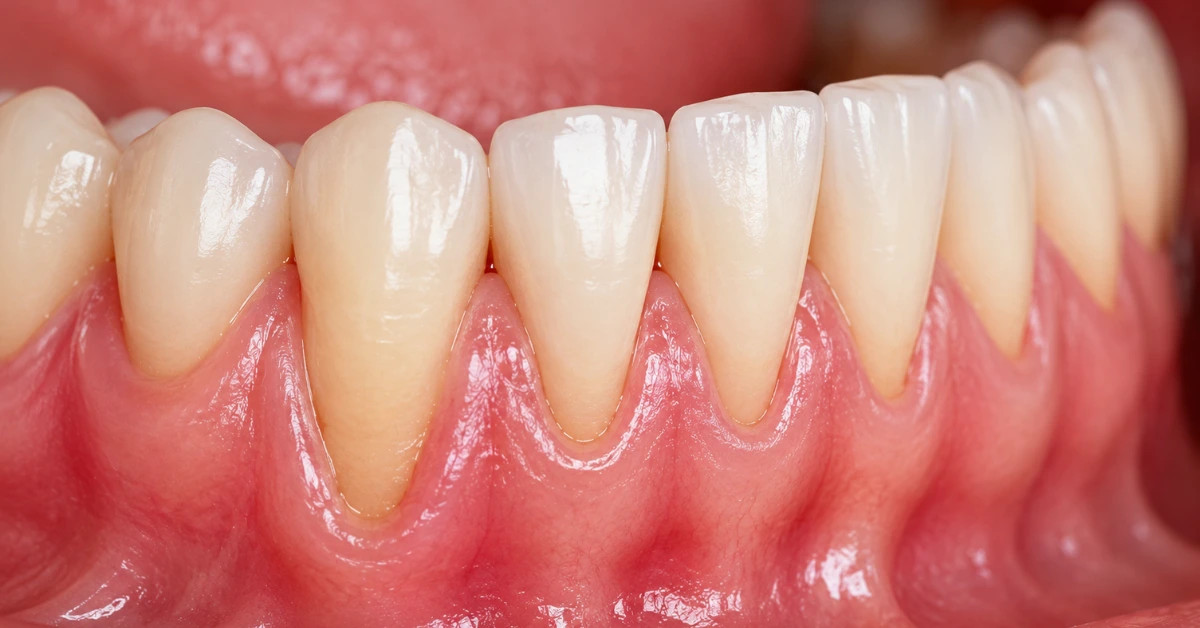
- Gum recession – When gums pull away from teeth, root surfaces become exposed and vulnerable to bacterial attachment.
- Persistent bad breath – Chronic bad breath that does not respond to brushing and flossing is often related to bacterial activity in deep pockets.
It is worth saying plainly: gum disease is not a sign that you have been negligent. It has genetic components, hormonal factors, and systemic connections – conditions like diabetes significantly increase risk. The important thing is addressing it when it is diagnosed, because gum disease does not reverse on its own.
The Deep Cleaning Procedure Step by Step
Knowing what to expect makes the appointment much less stressful. Here is what happens during a scaling and root planing visit.
- Periodontal assessment – Your hygienist charts pocket depths around every tooth. This baseline is what your follow-up results will be compared against.
- Local anesthetic – The area being treated is numbed. You will feel pressure and movement, but not pain. Most patients find this far more manageable than they anticipated.
- Scaling – Using hand scalers and an ultrasonic instrument, your hygienist removes all plaque and tartar from the tooth surface and deep into the pocket. The ultrasonic scaler vibrates at high frequency to break up deposits and flush the pocket with water.
- Root planing – The root surface is smoothed to remove embedded bacterial toxins and create a surface that gum tissue can reattach to as it heals.
- Antibiotic treatment (when indicated) – In some cases, a local antibiotic is placed into particularly deep pockets to support healing. This is not routine.
- Post-op instructions – The area is rinsed, and you receive instructions for the days following treatment.
Each quadrant typically takes 45 to 60 minutes. Avoid eating until the anesthetic wears off – usually 1 to 3 hours after your appointment.
Cost Comparison: Regular vs Deep Cleaning in Ontario
Cost is a real concern, and we want to be straightforward about it. The difference in price between a regular cleaning and a deep cleaning reflects the significant difference in clinical complexity.
In Ontario, fees are guided by the ODA Suggested Fee Guide, updated annually. Here are realistic cost ranges for the GTA:
| Service | Typical Cost Range (Ontario) |
|---|---|
| Regular cleaning (prophylaxis) | $150 – $350 per visit |
| Scaling – per 15-minute unit (ODA guide) | $66 per unit |
| Deep cleaning per quadrant (scaling + root planing) | $200 – $450 per quadrant |
| Full mouth deep cleaning (4 quadrants) | $800 – $1,800 total |
| Periodontal maintenance visit (after deep cleaning) | $150 – $300 per visit |
A few things to keep in mind. Most patients do not need all four quadrants treated – your dentist will treat only the areas where disease is active. And the total cost is often partially offset by insurance coverage, which we cover below.
The other cost to factor in is the cost of not treating gum disease. Periodontitis that progresses to advanced stages can lead to tooth loss – and tooth replacement costs considerably more than a deep cleaning.
Is Deep Cleaning Covered by Insurance?
In most cases, yes – dental insurance in Canada treats scaling and root planing as a basic or major service, depending on the plan, and covers a meaningful portion of the cost.
Here is how typical coverage works:
- Scaling (hygiene therapy) – Most plans cover scaling as a basic preventive service, often at 70% to 100%, though annual maximums apply. Coverage may be limited to a specific number of units per year.
- Root planing – Some plans classify this as a basic service; others treat it as a periodontic procedure covered at 50% to 80%. Check your plan’s periodontal coverage category.
- Annual maximum – Most plans cap benefits between $1,000 and $2,500 per year. A full-mouth deep cleaning may eat significantly into your annual maximum, so it is worth checking your remaining balance before scheduling.
- Pre-determination – For larger treatment plans, your dentist can submit a pre-determination to your insurer so you know your exact out-of-pocket cost before the appointment. We recommend requesting this.
Our teams at all Dental Team locations can help you understand your coverage and submit claims directly on your behalf.
CDCP Coverage for Scaling and Root Planing
The Canadian Dental Care Plan (CDCP) covers periodontal services, including scaling. For eligible patients – those without private dental insurance and with a household income under $90,000 – this can meaningfully reduce your out-of-pocket cost.
Under the CDCP’s co-payment structure:
- Under $70,000 household income – No co-payment on the CDCP fee amount
- $70,000 to $79,999 – 40% co-payment
- $80,000 to $89,999 – 60% co-payment
The important note here, as with all CDCP services, is that the plan reimburses dentists at its own federal fee schedule, which may be below the ODA provincial rate. If there is a difference between the CDCP fee and the office fee, you are responsible for that gap plus any co-payment. Ask our team for a pre-determination so there are no surprises.
Our practices are CDCP-participating providers. We direct-bill Sun Life on your behalf. Confirm your CDCP coverage is active before your appointment – renewals for the 2026-2027 benefit year close June 1, 2026.
Recovery and Aftercare Following a Deep Cleaning
Most patients are surprised by how manageable recovery is. It is not the same as recovering from oral surgery. That said, your gums need a few days to settle, and following aftercare instructions matters for how well the treatment works.
What to expect in the first 24 to 48 hours:
- Gum tenderness and sensitivity – The treated area will be sore once the anesthetic wears off. This typically resolves within 2 to 3 days. Over-the-counter ibuprofen or acetaminophen manages this well.
- Tooth sensitivity – Teeth may be more sensitive to temperature for up to a week. Sensitivity toothpaste helps.
- Some bleeding – Light bleeding when brushing is normal in the first 24 hours. Rinse gently with warm saltwater to soothe the area.
Aftercare instructions to follow:
- Eat soft foods for the first day or two – soups, yogurt, eggs, soft cooked vegetables. Avoid crunchy or spicy foods that can irritate healing tissue.
- Continue brushing and flossing – Gentle oral hygiene is still important in the treated area. Skipping brushing allows bacteria to accumulate and reduces the benefit of the procedure.
- Avoid tobacco – Smoking significantly impairs healing and is a major risk factor for gum disease progression.
- Attend your follow-up appointment – The 6-to-8-week periodontal recheck is essential. This is when your dentist measures whether pockets have reduced and confirms the treatment was effective.
Once your gum disease is under control, you will typically transition to periodontal maintenance visits every 3 to 4 months to keep the condition stable long-term.
Frequently Asked Questions About Deep Cleaning
Is a deep cleaning really necessary, or is my dentist just recommending it as an upsell?
A deep cleaning recommendation is based on measurable clinical findings – specifically, gum pocket depths of 4mm or more with signs of active infection or bone loss. These measurements are recorded and documented in your chart. If your dentist recommends scaling and root planing, ask to see your pocket depth readings. The numbers will tell the story clearly. A regular cleaning on a patient with active gum disease cannot treat what lies below the gumline – it would be like mopping a floor with a leaking pipe overhead.
Does a deep cleaning hurt?
With local anesthetic, most patients feel pressure and movement but not pain during the procedure. Some patients experience tenderness and sensitivity for a few days afterward, which is manageable with over-the-counter pain relievers. The anticipation is almost always worse than the experience itself. If you have dental anxiety, let us know when you book – we can discuss comfort options.
How long does a deep cleaning take?
Each quadrant typically takes 45 to 60 minutes. Many dentists treat one or two quadrants per appointment, so you may have two visits spread over 1 to 2 weeks. Some practices complete the full mouth in two appointments; others prefer one quadrant at a time. Your dentist will explain the plan at your consultation.
What happens if I do not get a deep cleaning when it is recommended?
Gum disease does not resolve without treatment – it progresses. Pockets deepen, bone loss continues, and eventually teeth become mobile and may need to be extracted. Treating gum disease early with scaling and root planing is far less invasive and far less expensive than the restorative work required once teeth are lost. If cost is a barrier, talk to us about payment options before deciding to delay.
Is the deep cleaning covered by the Canadian Dental Care Plan?
Yes, scaling is a covered service under the CDCP for eligible patients. Your co-payment depends on your household income – no co-payment under $70,000, 40% between $70,000 and $79,999, and 60% between $80,000 and $89,999. You must not have private dental insurance to qualify. Confirm your coverage with our team when you call to book.
How do I know if I have gum disease?
Many people with early to moderate gum disease have no significant symptoms – which is exactly why regular checkups matter. Signs that should prompt you to book an appointment include bleeding gums when brushing or flossing, persistent bad breath, gum recession, or teeth that feel slightly loose. A periodontal assessment at your next cleaning will give you a clear picture of your gum health.
Book Your Cleaning or Gum Health Assessment at The Dental Team
Whether you are due for a regular cleaning or think you might need a deeper look at your gum health, the first step is the same: book an appointment. Our hygienists will assess your gum pocket depths, walk you through what they find, and recommend the right level of care for where your gums are today – not where someone else’s are.
We offer dental cleanings and periodontal gum treatment at our locations across Milton, Mississauga, and Brampton. CDCP and insurance billing are handled directly at all locations.
Contact The Dental Team for more information about compassionate dental care services – we are here to help you take care of your gums without judgment and without surprises.