The short answer to how often should you get a dental cleaning is every six months – and that recommendation holds for most healthy adults and children. But the full answer depends on your individual gum health, medical history, lifestyle, and age. Some people genuinely need more frequent cleanings to stay ahead of problems, while the six-month standard is the right baseline for most others.
This guide covers the standard recommendation, who needs more frequent care, how the answer changes across life stages, and what actually happens when you let cleanings slide. No guilt – just useful information so you can make a plan that fits your life and your family.
The Standard Recommendation: Every 6 Months
Every six months is the professional guideline for dental cleaning frequency backed by dental associations in Canada, the United States, and internationally. For patients with healthy gums, no significant medical conditions, and low to moderate risk for tooth decay, twice-yearly cleanings are sufficient to:
- Remove tartar (calculus) that daily brushing and flossing cannot clear
- Catch early signs of cavities before they require fillings
- Monitor gum pocket depths and flag any early changes
- Screen for other concerns like oral cancer, bite issues, or grinding patterns
- Give your mouth a professional reset that reinforces your home care routine
The six-month interval is not arbitrary. It reflects the typical timeline for tartar to accumulate to a level where it begins creating meaningful risk. Plaque – the soft bacterial film on your teeth – starts forming within hours of brushing. Left undisturbed, it mineralizes into tartar within 24 to 72 hours. Tartar cannot be removed by brushing alone. Over six months, even someone with good oral hygiene accumulates enough tartar in certain areas to warrant a professional cleaning.
Book your next appointment at any of our dental cleaning locations across the GTA – Milton, Mississauga, Brampton, and Vaughan.
Why Regular Dental Cleanings Matter
A dental cleaning is more than cosmetic. The connection between oral health and overall health is well-documented, and routine cleanings are one of the most cost-effective things you can do for your long-term wellbeing.
- Gum disease is largely preventable with consistent care. Gingivitis – the early stage of gum disease – is fully reversible with professional cleaning and good home care. Left unaddressed, it progresses to periodontitis, which causes irreversible bone loss and is the leading cause of tooth loss in adults.
- Cavities caught early cost far less to treat. A small cavity found at a six-month checkup requires a simple filling. The same cavity found a year later, after it has reached the nerve, may require a root canal and crown.
- Oral health affects your whole body. Research links untreated gum disease to increased risk for cardiovascular disease, diabetes complications, and adverse pregnancy outcomes.
- Your dentist sees what you cannot. Between X-rays and pocket depth measurements, your dentist looks for early indicators of problems that have no symptoms yet.
Factors That May Require More Frequent Cleanings
For some patients, twice a year is not enough. Your hygienist will recommend a 3-to-4-month cleaning schedule – sometimes called periodontal maintenance – when certain risk factors are present. Here is what changes the calculation.
Gum Disease History
Once you have had active gum disease and completed treatment, your mouth requires more frequent monitoring. The bacteria responsible for periodontitis are not eliminated by treatment – they are reduced to a manageable level. Without more frequent professional cleanings, they recolonize deep pockets quickly. Most patients who have completed scaling and root planing are placed on a 3-to-4-month maintenance schedule rather than a standard six-month recall. This is not a permanent punishment – it is how clinicians protect the results of your treatment.
Diabetes or Other Systemic Conditions
Diabetes and gum disease have a two-way relationship. High blood sugar creates an environment where oral bacteria thrive, and active gum disease makes blood sugar harder to control. For patients managing diabetes, more frequent cleanings – typically every 3 to 4 months – are often recommended to interrupt this cycle. Other conditions that may warrant increased frequency include heart disease, autoimmune conditions, and anything requiring immunosuppressant medications.
Smoking
Smoking reduces blood flow to the gums, masking typical warning signs of gum disease (like bleeding) while damage progresses underneath. Smokers are significantly more likely to develop periodontitis and to see it worsen quickly. The clinical recommendation for most smokers is a 3-to-4-month cleaning schedule.
Pregnancy
Hormonal changes during pregnancy increase gum tissue sensitivity and the inflammatory response to plaque. “Pregnancy gingivitis” – bleeding, tender gums during the second trimester – is common. An additional cleaning during the second trimester is frequently recommended and is safe. Untreated gum inflammation during pregnancy has been associated with preterm birth and low birth weight, which makes dental visits during this time more important, not less.
Orthodontic Treatment
Braces and clear aligners create more surfaces where plaque accumulates and more areas that are harder to clean at home. Patients in active orthodontic treatment often benefit from 3-to-4-month cleanings to prevent decay around brackets and to keep gums healthy throughout treatment.
How Often for Children, Adults, and Seniors
The six-month guideline applies broadly across age groups, but the reasoning and what your dentist looks for at each visit shifts across life stages.
Children
Children should see a dentist by their first birthday or within six months of their first tooth appearing – whichever comes first. From that point, twice-yearly cleanings and checkups are the standard. Children are not exempt from gum disease, and their cavity risk is often higher than adults because of diet and developing oral hygiene habits.
At children’s cleanings, your dentist also watches for developmental patterns – how teeth are coming in, whether spacing looks appropriate, whether early signs of orthodontic needs are emerging. Catching these things at age 7 or 8 gives far more treatment flexibility than finding them at 12 or 13.
Our dentistry for children teams across all locations are experienced in keeping appointments positive for kids – especially those who are nervous about their first few visits.
Adults
For adults without significant risk factors, the twice-yearly standard applies. The main shift as adults age into their 30s and 40s is that gum disease becomes more prevalent and the consequences of skipping cleanings accumulate faster. Adults also carry more restorative work – fillings, crowns, bridges – that requires monitoring at each visit.
Seniors
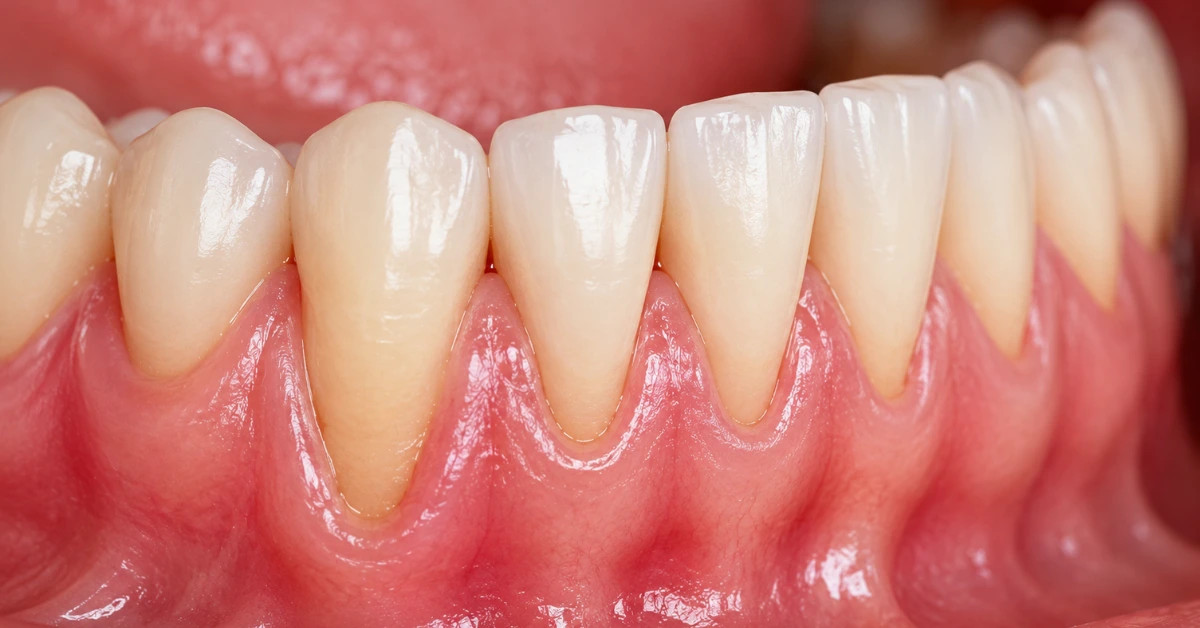
Seniors face a convergence of factors that often warrant more frequent visits. Gum recession exposes root surfaces that are more susceptible to decay than enamel. Many seniors take medications that cause dry mouth, which dramatically increases cavity risk. Reduced manual dexterity can make effective brushing harder. For seniors, three to four cleanings per year is often clinically appropriate – your dentist will assess this based on your medications, gum health, and existing dental work.
What Happens When You Skip Regular Cleanings?
Missing one cleaning is not a catastrophe. Missing cleanings consistently over years, however, has a predictable trajectory.
- Tartar accumulates below the gumline and creates persistent irritation – the beginning of gingivitis
- Gingivitis progresses to periodontitis – irreversible bone disease that cannot be undone, only managed
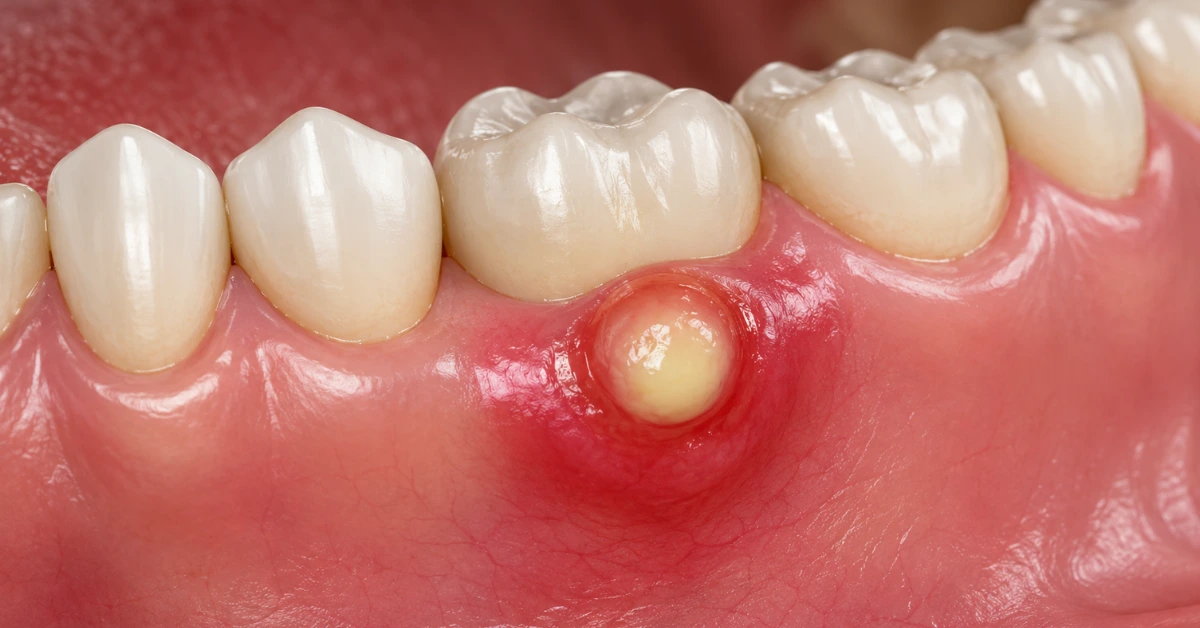
- Cavities that would have been caught early reach the inner pulp, requiring root canals, crowns, or extraction rather than a simple filling
- Old restorations fail undetected – a failing crown margin or cracked filling that could have been replaced becomes a dental emergency
- Oral cancer screening is missed – dentists perform visual oral cancer screening at checkups, where early detection significantly improves outcomes
A cleaning twice a year costs far less than a root canal, a crown, or a dental implant, and knowing what a cleaning costs in Ontario makes that trade-off easy to see. Preventive care is not an expense – it is what prevents much larger ones.
CDCP Coverage for Regular Dental Cleanings
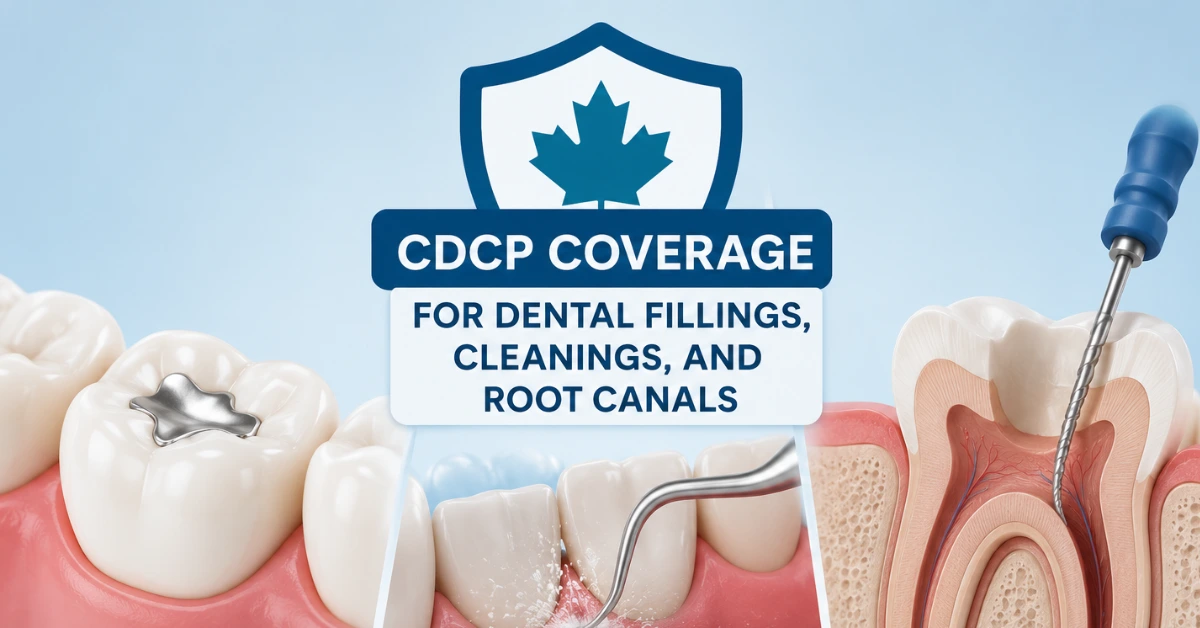
The Canadian Dental Care Plan (CDCP) covers preventive dental services, including dental exams and scaling (the clinical name for the tartar removal component of a cleaning). This is meaningful coverage for eligible Canadians who previously had no dental benefits.
What the CDCP covers for routine cleanings:
- Dental exams – recall exams (checkups) are covered, generally once every 12 months for adults under the standard frequency limits
- Scaling – billed in units of time, covered under preventive services within frequency limits
- X-rays – bitewing X-rays are covered at specified intervals
- Fluoride treatment – covered for eligible patients
Co-payment levels depend on your household income: no co-payment under $70,000, 40% between $70,000 and $79,999, and 60% between $80,000 and $89,999. You must not have access to private dental insurance to qualify.
One important note: the CDCP reimburses at its own federal fee guide, which may differ from the ODA provincial fee. If there is a gap between the two, you may be responsible for the difference plus any co-payment. Ask our team for a cost estimate before your appointment. CDCP renewals for 2026-2027 close June 1, 2026 – do not let your coverage lapse.
We direct-bill Sun Life at all Dental Team locations. Bring your CDCP card to your appointment and we handle the rest.
How to Actually Remember Your 6-Month Cleaning
Knowing you should go every six months and actually going are two different things. Here are the approaches that work:
- Book your next appointment before you leave. The most reliable method. Schedule the next visit while you are already at the office – most practices will send a reminder as the date approaches.
- Use calendar anchors. Book your cleanings at the same time each year – January and July, or your birthday month and six months later. Recurring reminders take 30 seconds to set up.
- Book the family together. Scheduling everyone’s appointments on the same day reduces trips and makes oral care a family routine rather than an individual errand that gets deprioritized.
- Sign up for recall reminders. All Dental Team locations send appointment reminders by text or email. Keep your contact information current so we can reach you when you are due.
Frequently Asked Questions About Dental Cleaning Frequency
Is every 6 months really necessary, or is once a year enough?
For most patients with healthy gums and low cavity risk, twice a year is the evidence-based standard. Some low-risk adults may be fine with annual cleanings – but that determination should come from your dentist based on your specific gum health readings and X-ray findings, not from general assumption. Many people who assume they are low-risk have early gum disease they are not aware of, because it rarely causes noticeable symptoms until it is already significant.
My gums bleed when I brush. Should I still get a cleaning?
Yes – and this is actually a sign that you should book sooner rather than later. Bleeding gums are typically a sign of inflammation, often caused by plaque and tartar accumulation at the gumline. A cleaning will remove the irritants causing the bleeding, and in many cases the bleeding resolves within a few weeks of consistent brushing and flossing post-cleaning. Bleeding gums are not a reason to avoid the dentist – they are a reason to go.
How often should my child get their teeth cleaned?
Children follow the same twice-yearly guideline as adults. First dental visits should happen by age one or when the first tooth appears. Starting early builds familiarity with the dental office environment, which makes future appointments easier. It also means problems are caught at the smallest and most treatable stage.
Can I get a cleaning while pregnant?
Yes – dental cleanings are safe during pregnancy and actively recommended. The second trimester is generally the most comfortable time. Hormonal changes increase gum sensitivity and the risk of gingivitis during pregnancy, making professional cleanings particularly important. Always let your dentist know you are pregnant so any X-ray protocols can be adjusted.
Does the CDCP cover my annual cleaning?
Yes, scaling and dental exams are covered services under the CDCP for eligible patients. Coverage is subject to frequency limits and the CDCP fee schedule. Confirm your coverage is active before your appointment by checking your My Service Canada Account or calling 1-833-537-4342. Our team will direct-bill on your behalf.
Ready to Book Your Next Cleaning?
Whether you are six months overdue or six years overdue, the right time to schedule your next cleaning is now. Regular care keeps small problems small and gives your dentist the opportunity to catch anything that needs attention before it becomes urgent.
The Dental Team offers dental cleanings for patients of all ages at our locations in Milton, Mississauga, Brampton, and Vaughan. We welcome new patients, accept the CDCP, and will handle your insurance billing directly.
Contact The Dental Team for more information about compassionate dental care services – and let us help your family stay on track with the care that prevents problems before they start.